
A complete guide for IT professionals, desk workers, and students in Pune
By Dr. Priya Rathi | Spine & Pain Specialist, Pune | 8 min read
A note from Dr. Priya Rathi
In my clinic, at least 6 out of every 10 patients I see for back pain or neck pain are working professionals who sit at a desk for 8 to 12 hours a day. Pune's booming IT and corporate culture has quietly created an epidemic of spine problems — and most of them are entirely preventable. This article is written to help you understand why your desk job hurts your spine, and what you can do about it.
If you are a software engineer in Hinjewadi, a manager in Magarpatta, or a student attending long online lectures in Baner — you are reading the right article. Back pain caused by prolonged desk work is one of the most common conditions treated at Painace Spine & Pain Clinic in Pune, and the good news is that in most cases, it does not require surgery.
Why Does Sitting All Day Hurt Your Spine?
Most people assume that rest is safe for the spine. But prolonged sitting is one of the most mechanically stressful positions for your lower back. Here is why:
When you sit — especially in a slumped or forward-leaning posture — the pressure inside your lumbar discs increases significantly compared to standing. Studies in spinal biomechanics have shown that sustained sitting increases disc pressure by 40 to 90% compared to a neutral standing position. Over 8 to 10 hours daily, this repetitive loading causes disc degeneration, facet joint stress, and muscle fatigue.
For Pune's working population, the problem is compounded by long commutes, low physical activity levels, and the habit of looking down at mobile phones — which adds up to hours of additional neck and spine strain every day.
Common Spine Conditions Caused by Desk Work
At our Clinic, the following conditions are most frequently seen in desk workers and IT professionals in Pune:
1. Lumbar (Lower Back) Pain
The most common complaint. Pain is usually felt across the lower back, sometimes radiating into the buttocks. It is often worse after sitting for long periods and temporarily relieved by standing or walking. The cause is typically a combination of disc irritation, facet joint stress, and tight hip flexor muscles.
2. Cervical Spondylosis and Neck Pain
Forward head posture — where the head juts out in front of the shoulders while looking at a screen — places enormous strain on the cervical spine. For every inch your head moves forward, the effective weight on your neck nearly doubles. This leads to cervical disc degeneration, muscle spasm, and eventually cervical spondylosis, which is degeneration of the neck vertebrae and discs.
3. Slip Disc (Herniated Disc)
Repeated disc pressure from prolonged sitting can cause the inner gel of a spinal disc to bulge or rupture. When this presses on nearby nerves, it causes radiating pain, numbness, or weakness in the arms (cervical disc) or legs (lumbar disc). Slip disc is increasingly common in people in their 30s and early 40s in Pune's IT workforce.
4. Sciatica
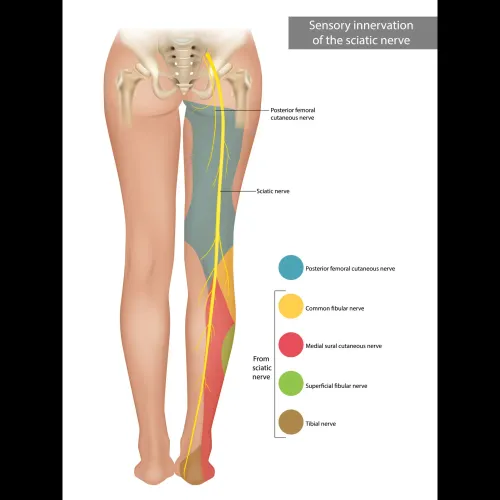
Sciatica — pain shooting from the lower back down through the buttock and leg — is frequently triggered by sitting with a wallet in the back pocket, sitting on hard surfaces for hours, or pressure from a herniated lumbar disc. It is one of the top three conditions I treat at my clinic in Pune.
5. Tension Headaches from Neck Stiffness
What many patients think is a headache problem is often a neck problem. Tight suboccipital muscles at the base of the skull — caused by poor screen height and forward posture — refer pain directly into the head, causing tension-type headaches. Treating the neck resolves the headaches.
Important:
These conditions are diagnosed based on clinical examination, not just MRI scans. At Sigma spine and pain Clinic, Dr. Priya Rathi uses a comprehensive muscle and nerve evaluation to identify the exact pain source — because MRI findings alone do not always explain your symptoms.
The 7 Biggest Desk Work Mistakes That Damage Your Spine
After examining thousands of patients, these are the most common habits that accelerate spine damage in desk workers:
• Sitting with a rounded lower back (slouching) rather than maintaining the natural lumbar curve
• Placing the monitor too low, forcing you to look downward for hours
• Sitting continuously for more than 45 to 60 minutes without a movement break
• Crossing the legs while sitting — this tilts the pelvis unevenly
• Holding the phone between the ear and shoulder for long calls
• Using a chair with no lumbar support, or sitting on the edge of the chair
• Working with the keyboard too far from the body, causing you to reach forward repeatedly
Ergonomics: Setting Up Your Workstation Correctly
Ergonomics is the science of designing your work environment to reduce physical strain. A correct workstation setup can dramatically reduce your risk of developing spine problems. Here is a quick guide:
Chair
• Seat height: feet flat on the floor, knees at 90 degrees
• Lumbar support: the chair should support the inward curve of your lower back
• Seat depth: 2 to 3 finger widths between the back of your knee and the seat edge
• Armrests: elbows at 90 degrees with shoulders relaxed — not hunched up
Monitor
• Top of the screen at eye level or slightly below — you should look very slightly down
• Distance: roughly arm's length away (50 to 70 cm)
• Laptop users: use an external keyboard and raise the laptop on a stand
Keyboard and Mouse
• Keep close to the body — elbows stay at roughly 90 degrees
• Wrists should be neutral, not bent upward or downward while typing
• Consider an ergonomic vertical mouse if you experience wrist or forearm pain
Dr. Rathi's Quick Tip
If you work from home, invest in a proper office chair with lumbar support. A dining chair or sofa may seem comfortable for an hour, but they cause significant postural damage over a full workday. This is one of the most cost-effective ways to protect your spine.
Movement Breaks: The 30:5 Rule
No amount of ergonomic furniture can fully compensate for sitting continuously for hours. Movement is medicine for the spine.
At Painace Clinic, I recommend the 30:5 Rule to all desk workers: for every 30 minutes of sitting, take a 5-minute movement break. Stand up, walk a short distance, do a gentle stretch. This simple habit reduces disc pressure, improves circulation to the spinal muscles, and prevents the muscle fatigue that builds into chronic pain.
Set a timer on your phone or use a desktop reminder app. Over time, this habit alone significantly reduces the risk of developing chronic back pain.
5 Desk Stretches Recommended by Dr. Priya Rathi
These simple stretches can be done at your desk or in a nearby corridor. They take less than 5 minutes and target the muscles most affected by prolonged sitting:
1. Chin Tucks (for neck and upper spine)
Sit upright. Gently pull your chin straight back — like making a double chin. Hold for 5 seconds, repeat 10 times. This reverses forward head posture and relieves cervical muscle tension.
2. Seated Lumbar Extension
Place both hands on your lower back and gently arch backwards, looking up toward the ceiling. Hold 3 to 5 seconds. Repeat 8 to 10 times. This is the single most effective counter-movement to hours of forward flexion.
3. Hip Flexor Stretch
Stand up and take a long step forward with your right foot (like a lunge). Keep your back knee close to the floor. Feel the stretch in the front of your left hip. Hold 20 seconds, switch sides. Tight hip flexors are a major contributor to lower back pain in desk workers.
4. Thoracic Rotation (for mid-back stiffness)
Sit sideways on your chair. Hold the back of the chair with both hands and rotate your upper body to face the back of the chair. Hold 10 seconds each side. This relieves stiffness in the thoracic spine and ribcage.
5. Neck Side Stretch
Tilt your right ear toward your right shoulder until you feel a stretch along the left side of your neck. Hold 20 seconds. Repeat on the other side. This releases the scalene and upper trapezius muscles, which are chronically tight in most desk workers.
When to See a Spine Specialist in Pune
Many people in Pune delay consulting a doctor until the pain becomes severe — by which point treatment is more complex and recovery takes longer. See a specialist if you experience any of the following:
• Back or neck pain that has persisted for more than 4 to 6 weeks despite rest and basic self-care
• Pain radiating down your arm or leg
• Numbness, tingling, or weakness in a hand, arm, leg, or foot
• Pain that wakes you from sleep
• Worsening pain despite avoiding activities
• Loss of bladder or bowel control — this is a medical emergency, seek care immediately
Non-surgical treatment first
At Painace Spine & Pain Clinic, Pune, Dr. Priya Rathi specialises in non-surgical management of back and neck pain. Advanced techniques including ultrasound-guided injections, nerve blocks, radiofrequency ablation (RFA), and personalised rehabilitation programmes can provide significant and lasting relief — without surgery in the majority of cases.
Frequently Asked Questions
Can back pain from sitting be cured completely?
In most cases, yes — particularly when the condition is identified early and the underlying postural and ergonomic causes are addressed. With appropriate treatment and lifestyle changes, most patients achieve complete or near-complete relief.
Do I need an MRI for my back pain?
Not always. MRI is a useful tool but it is not the starting point for every case. At Painace Clinic, clinical evaluation comes first. An MRI is ordered when specific findings on examination suggest nerve involvement or structural damage. Many patients with normal MRIs still have significant pain, and many with 'abnormal' MRIs are pain-free. The scan is one piece of the puzzle, not the whole picture.
Is spine surgery necessary for a slip disc?
The vast majority of slip disc cases — over 85 to 90% — respond well to non-surgical management including targeted injections, physiotherapy, and nerve pain management. Surgery is reserved for cases with progressive neurological deficit or failure of adequate conservative treatment.
I work from home in Pune. Does this affect my spine differently?
Work-from-home setups are often worse for the spine than office setups because people tend to work from sofas, dining tables, or beds — all of which create poor spinal alignment. At Painace Clinic, we see a notable rise in work-from-home-related back and neck pain in patients from areas like Baner, Balewadi, Wakad, and Kharadi.
About Dr. Priya Rathi — Spine & Pain Specialist, Pune
Dr. Priya Rathi is an Interventional Pain and Spine Specialist practicing in Pune. She is the Founder and Director of Sigma Spine and Pain Clinic in Pune. She is also Director of Chronic Pain Services at Asian Ortho Spine Clinic, Aundh, and a visiting consultant at Sancheti Hospital, Shivaji Nagar.
Her approach focuses on identifying the true source of pain — not just treating MRI or X-ray findings — using ultrasound-guided and image-guided interventional procedures. She is one of very few pain physicians in Pune trained specifically in muscle pain, myofascial pain, and spine-related nerve conditions.
Qualifications: MBBS (BJMC Pune) | MD Anaesthesiology (GMC Aurangabad) | DNB Anaesthesia | FCPM | FIAPM
Book a Consultation
Sigma Spine and Pain Clinic, Baner | Asian Ortho Spine Clinic, Aundh | Sancheti Hospital, Shivaji Nagar Contact: +91 9823743726 | www.drpriyarathi.com
© Dr. Priya Rathi Sigma Spine & Pain Clinic, Pune. This article is for educational purposes only and does not replace a clinical consultation. If you are experiencing spine symptoms, please consult a qualified specialist.
By Dr. Priya Rathi | Spine & Pain Specialist, Pune | 8 min read
A note from Dr. Priya Rathi
In my clinic, at least 6 out of every 10 patients I see for back pain or neck pain are working professionals who sit at a desk for 8 to 12 hours a day. Pune's booming IT and corporate culture has quietly created an epidemic of spine problems — and most of them are entirely preventable. This article is written to help you understand why your desk job hurts your spine, and what you can do about it.
If you are a software engineer in Hinjewadi, a manager in Magarpatta, or a student attending long online lectures in Baner — you are reading the right article. Back pain caused by prolonged desk work is one of the most common conditions treated at Painace Spine & Pain Clinic in Pune, and the good news is that in most cases, it does not require surgery.
Why Does Sitting All Day Hurt Your Spine?
Most people assume that rest is safe for the spine. But prolonged sitting is one of the most mechanically stressful positions for your lower back. Here is why:
When you sit — especially in a slumped or forward-leaning posture — the pressure inside your lumbar discs increases significantly compared to standing. Studies in spinal biomechanics have shown that sustained sitting increases disc pressure by 40 to 90% compared to a neutral standing position. Over 8 to 10 hours daily, this repetitive loading causes disc degeneration, facet joint stress, and muscle fatigue.
For Pune's working population, the problem is compounded by long commutes, low physical activity levels, and the habit of looking down at mobile phones — which adds up to hours of additional neck and spine strain every day.
Common Spine Conditions Caused by Desk Work
At our Clinic, the following conditions are most frequently seen in desk workers and IT professionals in Pune:
1. Lumbar (Lower Back) Pain
The most common complaint. Pain is usually felt across the lower back, sometimes radiating into the buttocks. It is often worse after sitting for long periods and temporarily relieved by standing or walking. The cause is typically a combination of disc irritation, facet joint stress, and tight hip flexor muscles.
2. Cervical Spondylosis and Neck Pain
Forward head posture — where the head juts out in front of the shoulders while looking at a screen — places enormous strain on the cervical spine. For every inch your head moves forward, the effective weight on your neck nearly doubles. This leads to cervical disc degeneration, muscle spasm, and eventually cervical spondylosis, which is degeneration of the neck vertebrae and discs.
3. Slip Disc (Herniated Disc)
Repeated disc pressure from prolonged sitting can cause the inner gel of a spinal disc to bulge or rupture. When this presses on nearby nerves, it causes radiating pain, numbness, or weakness in the arms (cervical disc) or legs (lumbar disc). Slip disc is increasingly common in people in their 30s and early 40s in Pune's IT workforce.
4. Sciatica
Sciatica — pain shooting from the lower back down through the buttock and leg — is frequently triggered by sitting with a wallet in the back pocket, sitting on hard surfaces for hours, or pressure from a herniated lumbar disc. It is one of the top three conditions I treat at my clinic in Pune.
5. Tension Headaches from Neck Stiffness
What many patients think is a headache problem is often a neck problem. Tight suboccipital muscles at the base of the skull — caused by poor screen height and forward posture — refer pain directly into the head, causing tension-type headaches. Treating the neck resolves the headaches.
Important:
These conditions are diagnosed based on clinical examination, not just MRI scans. At Sigma spine and pain Clinic, Dr. Priya Rathi uses a comprehensive muscle and nerve evaluation to identify the exact pain source — because MRI findings alone do not always explain your symptoms.
The 7 Biggest Desk Work Mistakes That Damage Your Spine
After examining thousands of patients, these are the most common habits that accelerate spine damage in desk workers:
• Sitting with a rounded lower back (slouching) rather than maintaining the natural lumbar curve
• Placing the monitor too low, forcing you to look downward for hours
• Sitting continuously for more than 45 to 60 minutes without a movement break
• Crossing the legs while sitting — this tilts the pelvis unevenly
• Holding the phone between the ear and shoulder for long calls
• Using a chair with no lumbar support, or sitting on the edge of the chair
• Working with the keyboard too far from the body, causing you to reach forward repeatedly
Ergonomics: Setting Up Your Workstation Correctly
Ergonomics is the science of designing your work environment to reduce physical strain. A correct workstation setup can dramatically reduce your risk of developing spine problems. Here is a quick guide:
Chair
• Seat height: feet flat on the floor, knees at 90 degrees
• Lumbar support: the chair should support the inward curve of your lower back
• Seat depth: 2 to 3 finger widths between the back of your knee and the seat edge
• Armrests: elbows at 90 degrees with shoulders relaxed — not hunched up
Monitor
• Top of the screen at eye level or slightly below — you should look very slightly down
• Distance: roughly arm's length away (50 to 70 cm)
• Laptop users: use an external keyboard and raise the laptop on a stand
Keyboard and Mouse
• Keep close to the body — elbows stay at roughly 90 degrees
• Wrists should be neutral, not bent upward or downward while typing
• Consider an ergonomic vertical mouse if you experience wrist or forearm pain
Dr. Rathi's Quick Tip
If you work from home, invest in a proper office chair with lumbar support. A dining chair or sofa may seem comfortable for an hour, but they cause significant postural damage over a full workday. This is one of the most cost-effective ways to protect your spine.
Movement Breaks: The 30:5 Rule
No amount of ergonomic furniture can fully compensate for sitting continuously for hours. Movement is medicine for the spine.
At Painace Clinic, I recommend the 30:5 Rule to all desk workers: for every 30 minutes of sitting, take a 5-minute movement break. Stand up, walk a short distance, do a gentle stretch. This simple habit reduces disc pressure, improves circulation to the spinal muscles, and prevents the muscle fatigue that builds into chronic pain.
Set a timer on your phone or use a desktop reminder app. Over time, this habit alone significantly reduces the risk of developing chronic back pain.
5 Desk Stretches Recommended by Dr. Priya Rathi
These simple stretches can be done at your desk or in a nearby corridor. They take less than 5 minutes and target the muscles most affected by prolonged sitting:
1. Chin Tucks (for neck and upper spine)
Sit upright. Gently pull your chin straight back — like making a double chin. Hold for 5 seconds, repeat 10 times. This reverses forward head posture and relieves cervical muscle tension.
2. Seated Lumbar Extension
Place both hands on your lower back and gently arch backwards, looking up toward the ceiling. Hold 3 to 5 seconds. Repeat 8 to 10 times. This is the single most effective counter-movement to hours of forward flexion.
3. Hip Flexor Stretch
Stand up and take a long step forward with your right foot (like a lunge). Keep your back knee close to the floor. Feel the stretch in the front of your left hip. Hold 20 seconds, switch sides. Tight hip flexors are a major contributor to lower back pain in desk workers.
4. Thoracic Rotation (for mid-back stiffness)
Sit sideways on your chair. Hold the back of the chair with both hands and rotate your upper body to face the back of the chair. Hold 10 seconds each side. This relieves stiffness in the thoracic spine and ribcage.
5. Neck Side Stretch
Tilt your right ear toward your right shoulder until you feel a stretch along the left side of your neck. Hold 20 seconds. Repeat on the other side. This releases the scalene and upper trapezius muscles, which are chronically tight in most desk workers.
When to See a Spine Specialist in Pune
Many people in Pune delay consulting a doctor until the pain becomes severe — by which point treatment is more complex and recovery takes longer. See a specialist if you experience any of the following:
• Back or neck pain that has persisted for more than 4 to 6 weeks despite rest and basic self-care
• Pain radiating down your arm or leg
• Numbness, tingling, or weakness in a hand, arm, leg, or foot
• Pain that wakes you from sleep
• Worsening pain despite avoiding activities
• Loss of bladder or bowel control — this is a medical emergency, seek care immediately
Non-surgical treatment first
At Painace Spine & Pain Clinic, Pune, Dr. Priya Rathi specialises in non-surgical management of back and neck pain. Advanced techniques including ultrasound-guided injections, nerve blocks, radiofrequency ablation (RFA), and personalised rehabilitation programmes can provide significant and lasting relief — without surgery in the majority of cases.
Frequently Asked Questions
Can back pain from sitting be cured completely?
In most cases, yes — particularly when the condition is identified early and the underlying postural and ergonomic causes are addressed. With appropriate treatment and lifestyle changes, most patients achieve complete or near-complete relief.
Do I need an MRI for my back pain?
Not always. MRI is a useful tool but it is not the starting point for every case. At Painace Clinic, clinical evaluation comes first. An MRI is ordered when specific findings on examination suggest nerve involvement or structural damage. Many patients with normal MRIs still have significant pain, and many with 'abnormal' MRIs are pain-free. The scan is one piece of the puzzle, not the whole picture.
Is spine surgery necessary for a slip disc?
The vast majority of slip disc cases — over 85 to 90% — respond well to non-surgical management including targeted injections, physiotherapy, and nerve pain management. Surgery is reserved for cases with progressive neurological deficit or failure of adequate conservative treatment.
I work from home in Pune. Does this affect my spine differently?
Work-from-home setups are often worse for the spine than office setups because people tend to work from sofas, dining tables, or beds — all of which create poor spinal alignment. At Painace Clinic, we see a notable rise in work-from-home-related back and neck pain in patients from areas like Baner, Balewadi, Wakad, and Kharadi.
About Dr. Priya Rathi — Spine & Pain Specialist, Pune
Dr. Priya Rathi is an Interventional Pain and Spine Specialist practicing in Pune. She is the Founder and Director of Sigma Spine and Pain Clinic in Pune. She is also Director of Chronic Pain Services at Asian Ortho Spine Clinic, Aundh, and a visiting consultant at Sancheti Hospital, Shivaji Nagar.
Her approach focuses on identifying the true source of pain — not just treating MRI or X-ray findings — using ultrasound-guided and image-guided interventional procedures. She is one of very few pain physicians in Pune trained specifically in muscle pain, myofascial pain, and spine-related nerve conditions.
Qualifications: MBBS (BJMC Pune) | MD Anaesthesiology (GMC Aurangabad) | DNB Anaesthesia | FCPM | FIAPM
Book a Consultation
Sigma Spine and Pain Clinic, Baner | Asian Ortho Spine Clinic, Aundh | Sancheti Hospital, Shivaji Nagar Contact: +91 9823743726 | www.drpriyarathi.com
© Dr. Priya Rathi Sigma Spine & Pain Clinic, Pune. This article is for educational purposes only and does not replace a clinical consultation. If you are experiencing spine symptoms, please consult a qualified specialist.
Keywords