1. What is Radiofrequency Ablation (RFA)?
Radiofrequency Ablation (RFA) is a minimally invasive, non-surgical procedure used to treat chronic low back pain. It works by using heat generated from radiofrequency waves to interrupt pain signals coming from specific nerves. In simple terms, it switches off the pain-carrying nerves without affecting movement or strength.
2. Who needs RFA for back pain?
RFA is helpful for patients who have chronic low back pain lasting more than 3 months, pain arising from facet joints, pain not relieved by medications or physiotherapy, and temporary relief after a diagnostic medial branch block.
3. What causes this type of back pain?
The most common cause treated with RFA is facet joint pain due to age-related degeneration, poor posture, previous injury, or muscle imbalance. These joints send pain signals through medial branch nerves.
4. How does RFA work?
A needle is placed near the pain-causing nerve. Heat generated using radiofrequency energy disables the nerve’s ability to send pain signals. The nerve can regrow over time.
5. Is the procedure painful?
The procedure is well tolerated. It is done under local anesthesia. Patients may feel mild discomfort or a brief heat sensation.
6. How is the procedure performed?
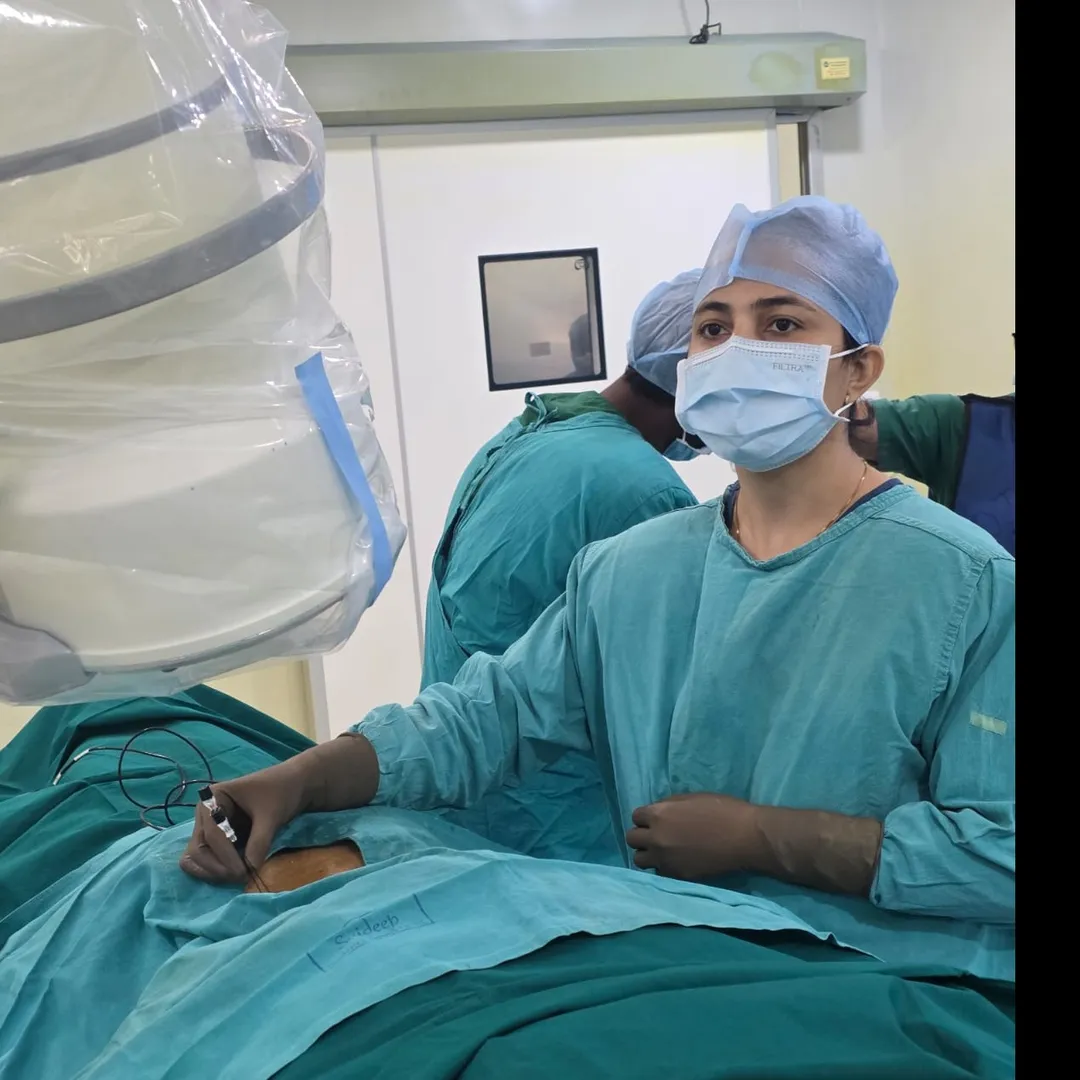
You lie on your stomach, the skin is numbed, a needle is guided using X-ray (C-arm), position is confirmed, and radiofrequency energy is applied. Total time is 20–40 minutes.
7. What are the advantages of RFA?
Minimally invasive, day-care procedure, long-lasting relief (6–18 months or more), reduced medication need, improved quality of life.
8. How long does pain relief last?
Relief typically lasts 6 to 18 months and the procedure can be repeated if needed.
9. Are there any risks?
Minor risks include temporary soreness, mild numbness, or rarely infection/bleeding. Serious complications are very rare.
10. What to expect after the procedure?
Go home same day, resume light activity in 24 hours, full relief in 1–3 weeks.
11. Is physiotherapy needed after RFA?
Yes. Strengthening, posture correction, and movement retraining are important for long-term success.
12. Is RFA better than surgery?
In many cases yes, especially for facet joint pain. It avoids implants, long recovery, and hospital stay.
13. When to consult a pain specialist?
If pain persists beyond 3 months, affects daily life, or keeps recurring.
Final Takeaway
RFA is a safe and effective treatment when the diagnosis is correct and performed by an expert.
Still struggling with persistent low back pain?
You don’t have to live with it. At our Sigma Spine and pain clinic, we specialize in advanced, non-surgical treatments like Radiofrequency Ablation, along with a holistic approach including medications, ultrasound-guided dry needling, and rehabilitation strategies tailored to you. If your pain has not improved despite treatment, it’s time to get the right diagnosis and targeted care.
Book your consultation today and take the first step towards a pain-free life.
📞 Call/WhatsApp: 9823743726
📍 Visit us: Sigma Spine and Pain Clinic
4th floor , Shree Bhagwati Suvarna , pan card club road , Baner , Pune 411045
Radiofrequency Ablation (RFA) is a minimally invasive, non-surgical procedure used to treat chronic low back pain. It works by using heat generated from radiofrequency waves to interrupt pain signals coming from specific nerves. In simple terms, it switches off the pain-carrying nerves without affecting movement or strength.
2. Who needs RFA for back pain?
RFA is helpful for patients who have chronic low back pain lasting more than 3 months, pain arising from facet joints, pain not relieved by medications or physiotherapy, and temporary relief after a diagnostic medial branch block.
3. What causes this type of back pain?
The most common cause treated with RFA is facet joint pain due to age-related degeneration, poor posture, previous injury, or muscle imbalance. These joints send pain signals through medial branch nerves.
4. How does RFA work?
A needle is placed near the pain-causing nerve. Heat generated using radiofrequency energy disables the nerve’s ability to send pain signals. The nerve can regrow over time.
5. Is the procedure painful?
The procedure is well tolerated. It is done under local anesthesia. Patients may feel mild discomfort or a brief heat sensation.
6. How is the procedure performed?
You lie on your stomach, the skin is numbed, a needle is guided using X-ray (C-arm), position is confirmed, and radiofrequency energy is applied. Total time is 20–40 minutes.
7. What are the advantages of RFA?
Minimally invasive, day-care procedure, long-lasting relief (6–18 months or more), reduced medication need, improved quality of life.
8. How long does pain relief last?
Relief typically lasts 6 to 18 months and the procedure can be repeated if needed.
9. Are there any risks?
Minor risks include temporary soreness, mild numbness, or rarely infection/bleeding. Serious complications are very rare.
10. What to expect after the procedure?
Go home same day, resume light activity in 24 hours, full relief in 1–3 weeks.
11. Is physiotherapy needed after RFA?
Yes. Strengthening, posture correction, and movement retraining are important for long-term success.
12. Is RFA better than surgery?
In many cases yes, especially for facet joint pain. It avoids implants, long recovery, and hospital stay.
13. When to consult a pain specialist?
If pain persists beyond 3 months, affects daily life, or keeps recurring.
Final Takeaway
RFA is a safe and effective treatment when the diagnosis is correct and performed by an expert.
Still struggling with persistent low back pain?
You don’t have to live with it. At our Sigma Spine and pain clinic, we specialize in advanced, non-surgical treatments like Radiofrequency Ablation, along with a holistic approach including medications, ultrasound-guided dry needling, and rehabilitation strategies tailored to you. If your pain has not improved despite treatment, it’s time to get the right diagnosis and targeted care.
Book your consultation today and take the first step towards a pain-free life.
📞 Call/WhatsApp: 9823743726
📍 Visit us: Sigma Spine and Pain Clinic
4th floor , Shree Bhagwati Suvarna , pan card club road , Baner , Pune 411045
Keywords