

Chronic Knee Pain: How Interventional Pain Management Can Help
If knee pain has been holding you back for months, you are not alone — and surgery may not be your only option.
What Is Chronic Knee Pain?
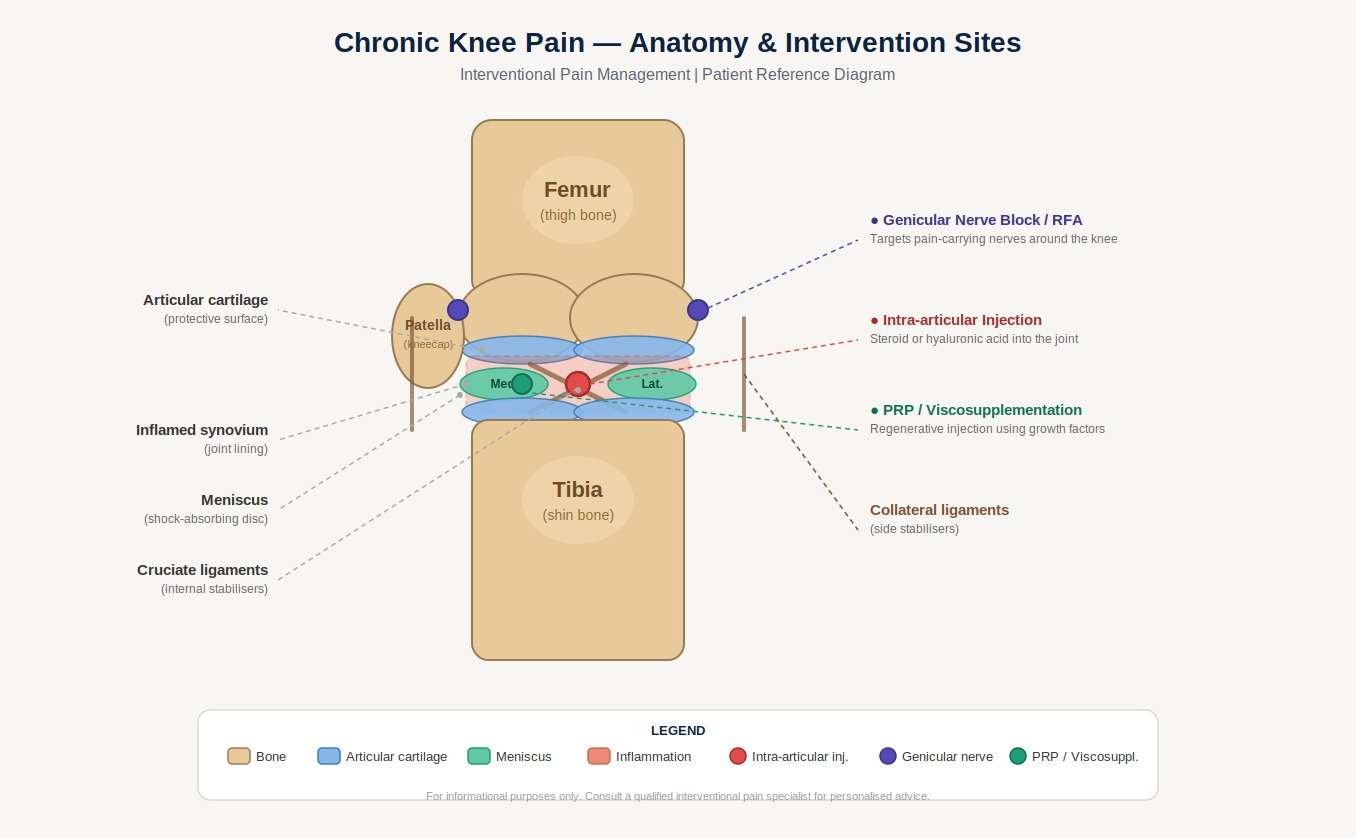
Knee pain lasting more than three months is considered chronic. It can stem from worn cartilage, inflamed joints, torn tissue, or irritated nerves — and often a combination of these. It affects people of all ages, from young athletes to older adults with arthritis, and can make everyday activities like walking, climbing stairs, or sleeping through the night genuinely difficult.
What Is Usually Causing It?
The most common culprits include:
• Osteoarthritis — gradual wear of the cartilage inside the joint, the most common cause in adults over 45.
• Meniscal tears — damage to the cushioning discs in the knee, causing pain and a catching sensation.
• Bursitis or tendinitis — inflammation around the knee from overuse or repetitive stress.
• Inflammatory arthritis — conditions like rheumatoid arthritis that cause the joint lining to swell.
• Post-injury or post-surgery pain — persistent pain after an ACL repair or knee replacement.
• Nerve-related pain — sometimes the nerves around the knee stay sensitised long after the original injury has healed.
What Is Interventional Pain Management?
Interventional pain management uses precise, minimally invasive procedures to target the exact source of your pain — rather than just masking it with medication. Most procedures are done as outpatient treatments, guided by ultrasound or X-ray imaging so the doctor can see exactly where the needle goes. There is little to no downtime, and many patients notice a significant difference within days.
Treatment Options
Joint Injections
A steroid or lubricating fluid (hyaluronic acid) is injected directly into the knee joint. Steroids calm inflammation quickly — great for flare-ups. Hyaluronic acid works like a top-up of the joint's natural fluid, easing friction and pain over several months.
Genicular Nerve Block
Small nerves around the knee (called genicular nerves) carry pain signals to the brain. Injecting a local anaesthetic around these nerves switches off those signals. It is both a diagnostic test and a treatment — if it works, you get relief within hours.
Radiofrequency Ablation (RFA)
If a nerve block gives good relief, RFA can make that relief last much longer. A small probe uses heat to gently deactivate the pain-carrying nerves. Most patients experience 6 to 18 months of significant pain reduction. It is especially useful for people with severe arthritis who are not ready for, or not suitable for, knee replacement surgery.
PRP (Platelet-Rich Plasma) Therapy
A small amount of your own blood is drawn, processed to concentrate the healing growth factors, and injected back into the knee. PRP helps reduce inflammation and encourages the joint to repair itself. It is a good option for mild to moderate arthritis and has shown strong results in clinical studies, with benefits lasting up to a year or more.
Prolotherapy
A sugar-based solution is injected into the ligaments and tendons around the knee to stimulate natural healing. It works well when knee pain is related to loose or weakened supporting structures.
Is This Right for You?
Interventional treatments are worth considering if you have had knee pain for three months or longer, tablets or physiotherapy have not given you enough relief, you want to avoid or delay surgery, or your pain is significantly affecting your daily life.
Your doctor will start with a thorough assessment — including your history, a physical examination, and a look at any existing scans — before recommending the most suitable option for you.
The Bottom Line
Chronic knee pain is treatable. With the right interventional approach, many patients regain meaningful function, reduce their reliance on painkillers, and get back to doing the things they enjoy — without surgery. If you have been putting up with knee pain, it is worth finding out whether one of these options could help you.
Disclaimer: This article is for general information only. Please consult a qualified pain specialist for advice specific to your condition.